![[personal profile]](https://www.dreamwidth.org/img/silk/identity/user.png)
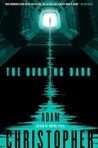 The Burning Dark by Adam Christopher
My rating: 2 of 5 stars
Humans don’t like the unknown: it works against every single instinct evolution has built into us. If we can’t explain something, we find a way to do so based on pre-existing constructs: that’s why every culture has its myths and legends, and why we have religion and science. Humans can’t help but ask questions, and we will find answers to those questions, somehow, some way. However, once we settle on a preferred construct, a preferred answer to a question, it’s very hard to change our minds when another possible answer comes along—even if that new answer might be a better response to the question in the first place. Trying to accept new answers, new approaches, can lead to conflict, and that’s not something the human brain likes any more than it likes not knowing.
One the greatest unknowns still left to our imagination is outer space. Though humanity has been looking at the night sky almost since it had the capacity to question, we’ve only really been exploring it for a very short amount of time; even then, we’re not doing the exploration ourselves, instead sending out proxies like probes and robots because outer space is far too harsh an environment for our species to survive. Therefore, outer space is prime fodder for writers who like to speculate on the nature of the unknown: that is, science fiction writers, and horror writers. And ever since H.P. Lovecraft’s Cthulhu Mythos became popular, there is significant overlap between the two.
( Read more... )